
Global Korea Scholarship (GKS)
منحة كوريا العالمية (GKS)
 ForsaEduforsaedu.com
About the scholarship program
The Global Korea Scholarship (GKS) is run by South Korea's National Institute for International Education (NIIED) and supports international students at bachelor's, master's and PhD levels. It usually covers tuition, airfare, a monthly allowance and medical insurance, plus a one-year Korean language program before degree studies. You can apply through the Korean embassy in your country or directly to a participating Korean university.
The Global Korea Scholarship (GKS) is the Korean government's scholarship, run by the National Institute for International Education (NIIED). It funds a year of Korean language and then the full degree, and each year it selects about 280 undergraduates and 2,000 graduate students.
The scholarship has two programmes, each with its own page of criteria, documents and benefits. This guide covers what the two share: application tracks, the timeline, the selection rounds, language, documents and common mistakes.
The two programmes at a glance
| Undergraduate (GKS-U) | Master's & PhD (GKS-G) | |
|---|---|---|
| Age | under 25 | under 40 |
| Grades | 80% or top 20% of the class | 80% or top 20% of the class |
| Duration | language year + 4 to 6 years | language year + 2 years (master's) or 3 (PhD) |
| All-inclusive allowance per year | ₩13.56M (language year), then ₩14.4M | ₩14.4M (language year), then ₩16.56M |
| Guidelines published | September | February |
| Places | 286 | 2,000 |
The all-inclusive allowance covers living costs, housing, health insurance, settlement and Korean-proficiency grants. The scholarship also pays tuition up to ₩5 million and airfare.
Two ways to apply
- Embassy Track: apply online on Study in Korea; the Korean embassy in your country of citizenship runs the first round. You choose up to 3 universities, at least one of them Type B (regional universities).
- University Track: apply directly to a participating Korean university, one university and one department only.
Never apply to two tracks or programmes at once, or your application is excluded. But if you fail the Embassy Track's first round, you can then apply through the University Track.
Some programmes are open to every nationality, even if your country has no places:
- UIC for bachelor's and associate degrees in science and engineering.
- R&D for master's and PhD in science and engineering.
- Global Network for English-taught master's with no language year.
Places for Arab countries
Embassy Track places for undergraduates come from the 2027 guidelines, and for graduates from the 2026 guidelines:
| Country | Undergraduate 2027 | Graduate 2026 (Embassy) |
|---|---|---|
| Egypt | 3 | 7 |
| Morocco | 2 | 6 |
| Tunisia | – | 6 |
| Iraq | 1 | 5 |
| Jordan | 1 | 4 |
| Syria | 2 | 4 |
| Oman | – | 4 |
| Saudi Arabia | 1 | 3 |
| Algeria | – | 3 |
| Bahrain | – | 3 |
| Libya | – | 3 |
| Palestine | – | 3 |
| UAE | – | 2 |
| Sudan | – | 2 |
| Mauritania | – | 2 |
| Somalia | – | 2 |
| Lebanon | – | 1 |
| Yemen | 2 | – |
Some of these countries also have graduate places in the University Track, including Egypt (8), Algeria (4), Sudan (2) and Kuwait (1). The numbers change every year, so check the guidelines for your year.
Timeline
| Stage | Undergraduate (2027 cycle) | Graduate (2026 cycle) |
|---|---|---|
| Guidelines published | 9 September 2026 | 2 February 2026 |
| Embassy Track applications | 15 – 30 September | 12 – 25 February |
| First-round result | by 16 October | 17 March |
| Second round at NIIED | November | early May |
| Third round at universities | by 23 December | by 5 June |
| Final result | 7 January 2027 (expected) | late June |
University Track dates are set by each university, usually running until November for undergraduates and April for graduates.
The cycle repeats the same way. For graduate study in 2027, expect the guidelines in February 2027.
The three selection rounds
- Embassy or university: document review, often with an interview.
- NIIED: file review, no interview.
- Universities (Embassy Track only): each university you chose reviews your file, then you pick one of the universities that accepted you.
If you choose 3 highly competitive universities, all three may reject you even after you pass the second round. This happened to 52 to 86 graduate candidates every year from 2020 to 2024.
Language: Korean and English
- You take a Korean language year before the degree, unless you have TOPIK 5 or 6.
- Graduate students must reach TOPIK 3 before starting the degree, and some departments ask for level 4. If you don't, the scholarship is cancelled.
- A language certificate is not required to apply, but it earns points:
- TOPIK 3 or higher: 10% extra for graduates, 3–5% for undergraduates.
- IELTS 7.0 or TOEFL iBT 95: 80% of the language points.
- Applying to a science or engineering department adds 5% in both programmes.
Documents: authentication first
- Certificates, transcripts and proof of citizenship need an apostille or consular confirmation. A document not in English or Korean needs a certified translation.
- You must prove your citizenship and both parents', with a birth certificate or family register. Korean dual nationals are not eligible.
- If your grades are not on a 4.0 or 100-point scale, attach a converted transcript stamped by your university.
- After acceptance, prepare several authenticated copies of your graduation certificate: you will need them for the university, the visa and immigration.
For help with references and the study plan, read the recommendation letters guide, and for language tests, IELTS, TOEFL or Duolingo?.
Mistakes that sink an application
- Applying to two tracks, or two universities in the University Track, or to a department not listed in the "University Information" file.
- Choosing 3 Type A universities without a Type B one.
- Uploading unauthenticated documents, or grades without an official conversion.
- Applying as an expected graduate and not sending the final certificate on time (31 July for graduates, 31 December for undergraduates).
- Withdrawing after the final result: you cannot apply again (for three years for graduates, ever for undergraduates), and your country's quota shrinks. Withdrawing within 3 months of enrolment means repaying everything paid to you.
- Anyone who has already had a Korean government scholarship for a degree cannot apply.
Available programmes (2)
Each programme has its own requirements, documents and benefits. Open it to see them in full with the application steps:
Two Global Korea Scholarship programmes, each with its own page of criteria, documents and benefits. The undergraduate call opens in September and the master’s and PhD call in February; for both you apply through the embassy or a university.
- View Details
Global Korea Scholarship (GKS) for Undergraduate Studies
A bachelor’s or associate degree for applicants under 25, with a Korean language year. The Embassy Track covers 74 countries; the UIC programme is open to all nationalities.
BachelorFully Funded4 majorsDeadline varies by university or programme - View Details
Global Korea Scholarship (GKS) for Master's and PhD Studies 2027
A master’s or PhD for applicants under 40, with a Korean language year. 2,000 places, including R&D and Global Network programmes open to all nationalities.
Master, PhDFully FundedAll fieldsNext cycle not announced yet
Life and living
Seoul · South Korea
Life and living
Seoul · South Korea
Living in Seoul
South Korea’s capital and hub of technology and Korean culture, home to Seoul National, Yonsei and Korea universities.
Student housing
Yonsei GIT dormitory: KRW 1,525,000 per semester; Study in Korea estimates dorms at KRW 500,000–700,000 a month.
Transport for students
The Climate Card for unlimited travel costs KRW 65,000 a month, or KRW 55,000 for young people aged 19–34 (2024 prices).
Top landmarks
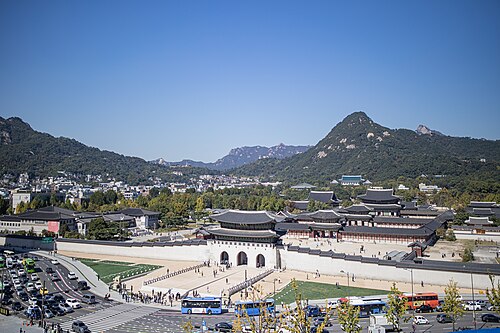
Gyeongbokgung Palace
서울관광 아카이브 · KOGL Type 1 · Wikimedia Commons
N Seoul Tower
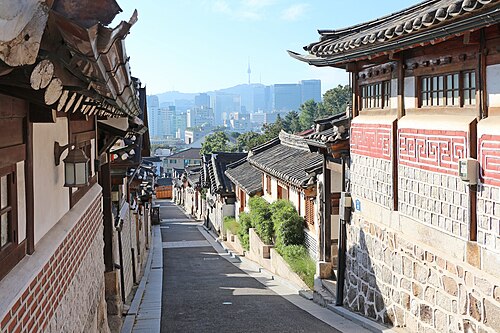
Bukchon Hanok Village
Bgag · CC0 · Wikimedia Commons
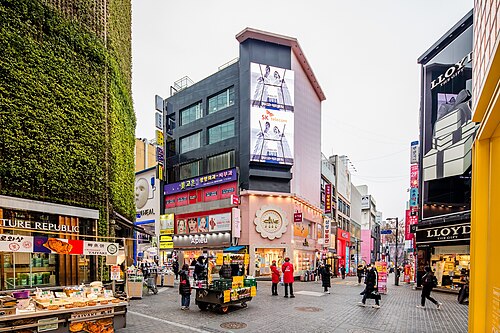
Myeongdong
서울연구데이터서비스 · KOGL Type 1 · Wikimedia Commons
Last verified: October 2026
Sources:Seoul Metropolitan GovernmentYonsei GIT – Tuition and dormitoryStudy in Korea – Living expensesKorea Times – Climate Card youth discount
Studying and living in South Korea
Costs and living
Tuition Fees in South Korea (2026/2027): • National Universities: 2,000 to 4,500 USD per semester (approximately 2.6M to 5.8M KRW). • Private Universities: 3,500 to 7,500 USD per semester (Humanities: 4M–5M KRW; Engineering and Sciences: 6M–8M KRW). Living Expenses & Financial Proof: • Average living costs: 700 to 1,100 USD per month (~900,000 to 1,400,000 KRW) including university dormitories which cost 300–500 USD/month, food, and transport. • Financial proof for D-2 Student Visa: Bank statement verifying approximately 20,000 USD for universities in the Seoul Capital Area, or 18,000 USD for regional universities.
Working while studying
Work During Studies: • D-2 visa holders can work part-time up to 20–25 hours per week during term time (extended to 30 hours for students with TOPIK Level 4+), and unlimited hours during summer and winter breaks with university and immigration approval. • Minimum hourly wage: ~9,860 to 12,000 KRW. Post-Study Work & Settlement: • Graduates can switch to the D-10 Job Seeker Visa, allowing up to 2 full years to secure employment in South Korea. • Successful candidates convert to the E-7 Professional Employment Visa or F-2 Points-Based Resident Visa, leading to permanent residency pathways for STEM talent.
Faculties and majors at the university
3 fields · 11 majors
Faculties and majors at the university
3 fields · 11 majors
Engineering, ICT & Semiconductor Tech
Natural Sciences, Medicine & Biotechnology
Show all majors (+1)Show less
Business, Economics, Korean Studies & Media
Frequently Asked Questions (FAQ)
Key questions and answers regarding eligibility, documents, and application steps.
Yes. It pays tuition up to ₩5 million (the university covers the rest), the Korean language year, airfare, and an all-inclusive allowance for living costs, housing and health insurance.
The allowance is yearly and all-inclusive. Undergraduate (2027 cycle): ₩13.56M in the language year, then ₩14.4M. Graduate (2026 cycle): ₩14.4M in the language year, then ₩16.56M, about ₩1.38M a month.
No. You take a funded Korean language year before the degree. A TOPIK certificate earns extra points, and TOPIK 5 or 6 exempts you from the language year.
Undergraduate applications open every September (the 2027 Embassy Track closed on 30 September 2026). Master’s and PhD applications open in February, with the 2027 guidelines expected in February 2027.
Yes, in some programmes: UIC for bachelor’s and associate degrees in science and engineering, and R&D and Global Network for graduate study, all open to every nationality through the University Track.
In the Embassy Track you apply through the Korean embassy in your country and choose up to 3 universities, at least one Type B. In the University Track you apply directly to one university and one department. You may not apply to both at once.
Yes. Certificates, transcripts and proof of citizenship need an apostille or consular confirmation, and documents not in English or Korean need a certified translation.
Yes, with a certificate of expected graduation, but the authenticated final certificate and transcript must arrive on time: 31 December for undergraduates (2027 cycle) and 31 July for graduates (2026 cycle), or the acceptance is cancelled.
Global Korea Scholarship (GKS) is listed as: Fully Funded. The exact benefits are not verified yet, so check the official website (http://www.niied.go.kr/user/nd35203.do) before applying.
Deadline varies by university or programme. Follow the official website for updates.
There are two routes depending on your country and programme: nomination through the host country's embassy or your home ministry, or an application through a participating university where available. Each route has its own deadlines and quotas, so check which route is open for your country on the official website (http://www.niied.go.kr/user/nd35203.do). ForsaEdu does not receive applications or charge any fee.
Track your academic readiness
Use the checklist in your profile to prepare your documents and make sure you meet this scholarship’s requirements.
Open readiness checklistSimilar scholarships
 South KoreaQS #50
Yonsei University
Yonsei University in Seoul, one of Korea's oldest private universities, offers international students merit-based scholarships at undergraduate and graduate levels, ranging from partial tuition reductions to full waivers. The university also hosts students funded by the Global Korea Scholarship…
 South Korea
Korea Advanced Institute of Science and Technology (KAIST)
KAIST (Korea Advanced Institute of Science and Technology) in Daejeon is Korea's first research university for science and engineering, with most programmes taught in English. International students admitted to graduate study receive a scholarship covering tuition, a monthly stipend and health…
 South Korea
Seoul National University
Seoul National University (SNU) is South Korea's flagship national university, founded in 1946, with its main campus at Gwanak in Seoul. It covers the humanities, social sciences, natural sciences, engineering, medicine and the arts, plus professional graduate schools in law, public administration…