
 1 / 2
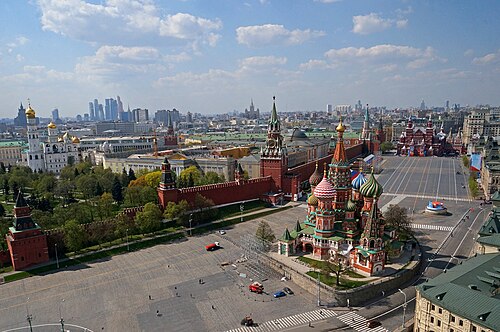
Red Square
Moscow
6 universitiesRussia’s capital and largest city, home to Moscow State University, HSE and MIPT, with one of the world’s largest metro networks.
Also worth seeing: St Basil’s Cathedral, Moscow State University main building
Russia is one of the world's leading study destinations for international and Arab students, renowned for world-class education in engineering, medicine, natural sciences, and IT at highly affordable costs with heavily subsidized campus accommodation. Each year, the Russian government awards approximately 30,000 full-tuition quota scholarships through the official Education in Russia portal, while major nationwide competitions such as the Open Doors Olympiad and Skoltech's English-taught fellowships offer fully funded graduate pathways. Under federal law, full-time international students can also work legally during their studies without a special work permit.
Red Square
Moscow
Where would you study? The best-known landmarks of each city and its universities in our guide.
1 / 2Red Square
Russia’s capital and largest city, home to Moscow State University, HSE and MIPT, with one of the world’s largest metro networks.
Also worth seeing: St Basil’s Cathedral, Moscow State University main building
 1 / 3
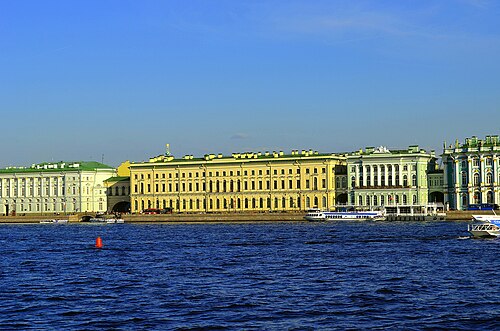
Hermitage Museum
Russia’s second city and cultural capital on the Neva, home to Saint Petersburg State University and ITMO University.
Also worth seeing: St Isaac’s Cathedral
 1 / 3
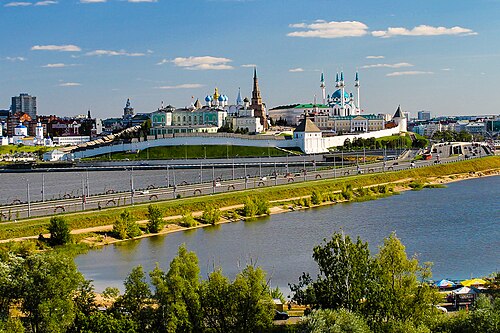
Kazan Kremlin
Capital of Tatarstan on the Volga, where Tatar and Russian cultures meet, home to Kazan Federal University (1804).
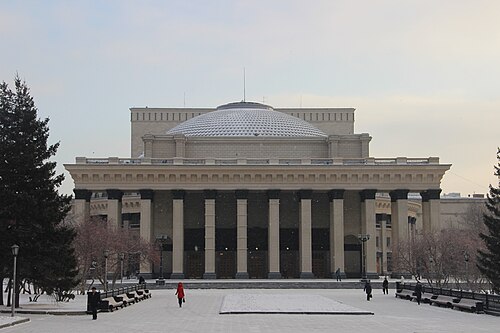 1 / 3
Novosibirsk Opera and Ballet Theatre
Russia’s third-largest city and the capital of Siberia, near the Akademgorodok science town, home to Novosibirsk State University.
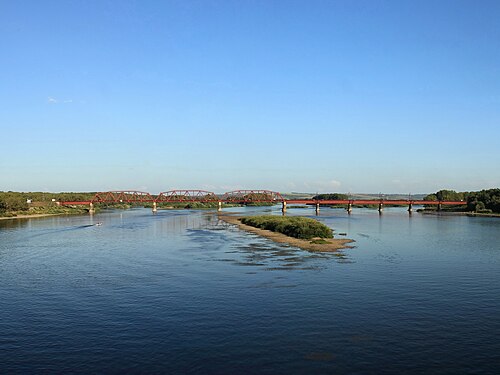 1 / 1
Tom (river)
A historic student city in Siberia known for its wooden architecture, home to Tomsk State University (1878), the oldest in Siberia.
Also worth seeing: Tomsk State University, Epiphany Cathedral, Tomsk
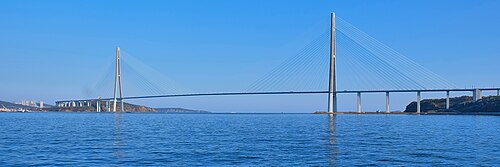 1 / 2
Russky Bridge
Russia’s main Pacific port near China and Japan, home to Far Eastern Federal University and its Russky Island campus.
Also worth seeing: Vladivostok Fortress
Chelyabinsk Opera and Ballet Theatre
A major industrial city at the foot of the southern Urals, home to South Ural State University.
Also worth seeing: Kirovka Street
Capital of Udmurtia near the Urals, a famous arms-making city, home to Udmurt State University.
Also worth seeing: Kalashnikov Museum, St. Michael's Cathedral, Izhevsk, Izhevsk Pond
Fees for international students and the highest discount or scholarship available, from each university’s official sources.
جامعة الشرق الأقصى الفيدرالية
جامعة المدرسة العليا للاقتصاد
جامعة قازان الفيدرالية

معهد موسكو للفيزياء والتكنولوجيا (فيزتيك)

جامعة الصداقة بين الشعوب في روسيا

جامعة سانت بطرسبرغ الحكومية

معهد سكولكوفو للعلوم والتكنولوجيا (سكولتك)
جامعة موسكو الحكومية

جامعة باومان موسكو التقنية الحكومية
جامعة ITMO

جامعة نوفوسيبيرسك الحكومية
جامعة جنوب الأورال الحكومية

جامعة تومسك الحكومية
جامعة أودمورت الحكومية
Filter by funding type and study level.
Government bodies funding scholarships for international students — their scholarships carry a «Government» badge below.

by Open Doors Russian Scholarship Project (International Olympiad)
by Russian Government
by Skolkovo Institute of Science and Technology (Skoltech)
by Kazan Federal University
by Peoples' Friendship University of Russia
by Far Eastern Federal University
Fellowships, competitions, leadership summits and volunteering hosted or run from here — not study scholarships, so not included in the scholarship count.
• Undergraduate: Two tracks exist — the 4-year Bachelor's degree across most subjects, and the traditional 5-to-6-year "Specialist" degree widely used in medicine, dentistry, and aerospace engineering. • Postgraduate: Master's degrees take 2 years; Doctorates (Aspirantura) take 3 to 4 years of intensive research. • Russian Language Preparatory Year (Rabfak): Students wishing to study in Russian take a 1-year intensive foundation course covering Russian and subject terminology; it is completely free of charge for government quota recipients. • English-Taught Programs: Leading universities (such as Skoltech, RUDN, HSE University, Kazan Federal, and ITMO) offer complete bachelor's and master's programs in English with no prior Russian required. • Academic Year: Runs from September 1 to late June/July, divided into two semesters (autumn and spring).
1) Russian Government Quota: Apply online via the official portal (education-in-russia.com), typically opening between autumn and mid-winter. Applicants select up to 6 universities and coordinate with local Russian Houses (Rossotrudnichestvo) or embassies. 2) International Olympiads & Competitions: Nationwide competitions like the Open Doors Olympiad, SPbU International Competition, and HSE GSC provide direct admission and 100% full tuition coverage. 3) Direct Commercial Admission: Students can apply directly through university admissions websites with high acceptance rates, modest tuition fees, and straightforward online tests. 4) Required Documents: Passport valid for at least 18 months beyond visa entry date, certified notarized translations of diplomas and academic transcripts into Russian, and medical certificates including an HIV test.
Costs at a glance
| Item | Estimate |
|---|---|
| Tuition at public universities (per year)based on 2 universities in our guide | RUB 350,000 – RUB 700,000 |
| Living costs per month (incl. housing) | $270 – $670 |
| Living costs for a full year (12 months) | $3,240 – $8,040 |
Estimates for comparison only; exact fees are on each university page and its official source.
Russia offers outstanding value for money compared to Western destinations: • International Tuition (if self-funded): Typically ranges from USD 1,800 to USD 4,500 per year for engineering and sciences, USD 3,500 to USD 7,000 for general medicine in English, and under USD 2,000 in regional universities. • Student Housing: University dormitories are heavily subsidized and cost-effective, typically costing between USD 15 and USD 70 per month, including utilities and internet. • Living Expenses: A monthly budget of USD 250 to USD 400 is generally sufficient for groceries, public transport, and personal expenses in most Russian cities (USD 450 to USD 600 in Moscow or St. Petersburg). • Mandatory Medical Insurance: Approximately USD 80 to USD 150 annually.
1) Official Study Invitation: Following admission, the university requests an official electronic invitation from the Ministry of Internal Affairs (MVD) or Ministry of Foreign Affairs, taking 20 to 40 days. 2) Student Visa Application: Apply at the Russian consulate or visa application center in your home country. An initial 90-day single-entry visa is issued, which is extended into a 1-year multi-entry student visa upon arrival for the entire duration of your studies. 3) Requirements: Valid passport, visa application form, photos, and an official HIV-negative certificate issued within the past 3 months. 4) Upon Arrival: Complete migration registration within 7 business days, and undergo standard fingerprinting and medical verification within 90 days.
• Under Russian federal legislation, full-time international students enrolled at accredited higher education institutions have the right to work legally in their spare time without needing a separate work permit. • No special government authorization or work license fees are required; a valid certificate of student enrollment is sufficient for employers. • Students can work both on-campus (teaching assistants, research labs, campus services) and off-campus (freelancing, translation, IT, retail, or hospitality). • After graduation, international graduates from accredited Russian universities can benefit from simplified procedures for temporary and permanent residency permits.
Information last verified: October 14, 2026Official source
Key questions and answers regarding eligibility, documents, and application steps.
Yes, leading universities such as Skoltech, RUDN, Kazan Federal, HSE, and ITMO offer extensive English-taught degree programs in medicine, engineering, AI, and business with no prior Russian required.
Each year, the Russian government awards approximately 30,000 full scholarships covering 100% of tuition fees for the entire degree and foundation year, along with a monthly academic stipend and access to heavily subsidized dormitory housing via education-in-russia.com.
Yes, under federal legislation, all full-time international students at accredited Russian universities have the legal right to work without needing an additional work permit.
University dormitory housing is heavily subsidized, costing only USD 15 to USD 70 per month. General living expenses range from USD 250 to USD 400 monthly in regional cities, and USD 450 to USD 600 in Moscow and St. Petersburg.
It is an intensive one-year academic foundation course for international students planning to study in Russian, focusing on language acquisition and specialized terminology, provided free for government quota scholars.
No. Neither Russian law nor the Russian Government (quota) scholarship on education-in-russia.com sets a maximum age: you can enrol in a bachelor's, master's or PhD at any age as long as you hold the required qualification (secondary school for a bachelor's, a bachelor's for a master's, a master's for a PhD). Applicants under 18 need a parental travel consent and a consent from their legal representative, certified by a notary or a Russian consulate. Some competitions, such as tracks of the Open Doors olympiad, may set their own age limit in their rules, so check before applying.
 Community Solutions Program (CSP) 2027IREX · OtherDeadline: 24 Nov 2026
 World Food Forum Youth Policy Board 2027–2028World Food Forum (FAO) · Volunteering & Youth Exchange, Bachelor, MasterDeadline: 30 Nov 2026
 University of Lincoln Global Leaders ScholarshipUniversity of Lincoln · Bachelor, MasterDeadline: 7 Jun 2027
 IREXUnited States
 World Food Forum (FAO)Italy
 University of LincolnUnited Kingdom · Lincoln
 American UniversityUnited States · Washington, D.C.Harvard Kennedy School Belfer Center FellowshipsBelfer Center for Science and International Affairs · Postdoc, PhD, OtherDeadline: 1 Dec 2026Giovanni Armenise Harvard Foundation Summer Fellowship ProgramGiovanni Armenise Harvard Foundation · MasterDeadline: 1 Dec 2026