
 1 / 4
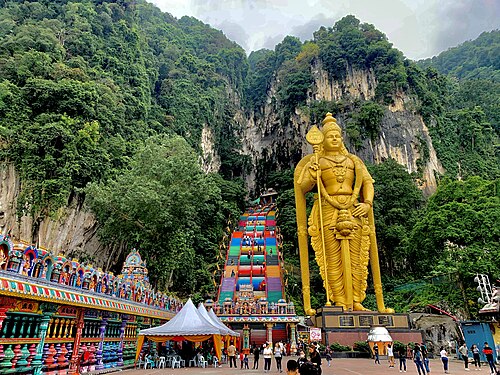
Batu Caves
Selangor
8 universitiesMalaysia’s most populous state, surrounding Kuala Lumpur, with university towns such as Shah Alam, Petaling Jaya and Serdang and many public and private universities.
Malaysia is one of Asia’s most popular study destinations for Arab students, with around 167,000 international students. It combines reasonable fees compared with Europe and Australia, a low cost of living, many English-taught programmes and a comfortable Muslim-majority environment. It has strong public research universities such as Universiti Malaya, UKM, UPM, USM, UTM and the International Islamic University Malaysia (IIUM), many private universities that offer discounts to international students, and government scholarships such as the Malaysia International Scholarship (MIS) and the Malaysian Technical Cooperation Programme (MTCP).
Batu Caves
Selangor
Where would you study? The best-known landmarks of each city and its universities in our guide.
1 / 4Batu Caves
Malaysia’s most populous state, surrounding Kuala Lumpur, with university towns such as Shah Alam, Petaling Jaya and Serdang and many public and private universities.
Malaysia’s capital and business hub — a multicultural city where much of university life is in English, home to Universiti Malaya and many private universities.
Also worth seeing: Petronas Towers, KL Tower, Merdeka Square, National Mosque
 1 / 3
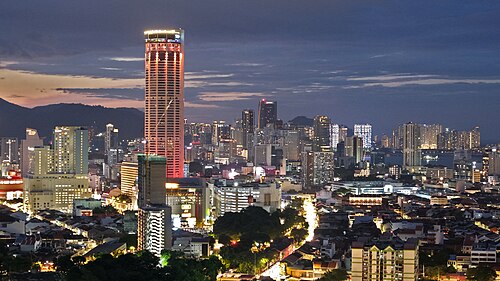
George Town, Penang
The island state of Penang and its UNESCO-listed capital George Town, home to Universiti Sains Malaysia (USM).
 1 / 2
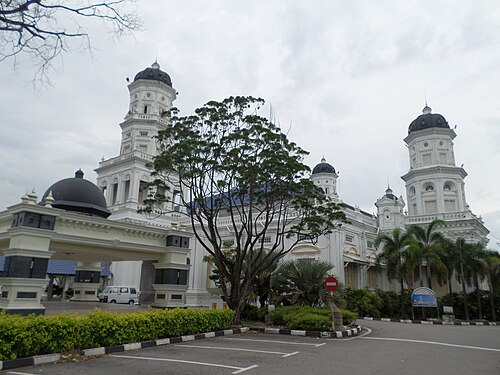
Sultan Abu Bakar State Mosque
The southernmost state of Peninsular Malaysia, facing Singapore, home to Universiti Teknologi Malaysia (UTM).
Also worth seeing: Endau-Rompin National Park
 1 / 2
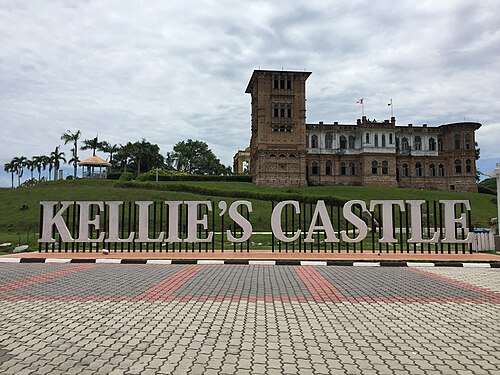
Kellie's Castle
A state in north-western Malaysia with Ipoh as its capital, home to Universiti Teknologi PETRONAS (UTP) in Seri Iskandar.
Also worth seeing: Lenggong Valley
 1 / 2
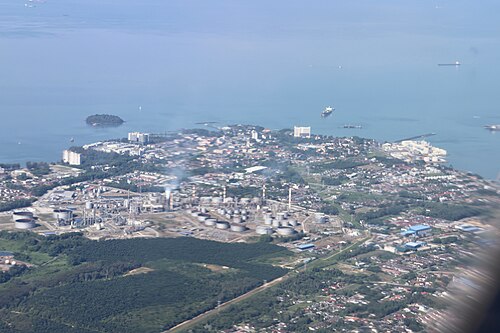
Port Dickson
A state south of Kuala Lumpur with Minangkabau heritage, home to INTI International University in Nilai.
Also worth seeing: Istana Lama Seri Menanti
A Famosa
The historic state of Melaka on the Strait, with a UNESCO-listed capital, home to Universiti Teknikal Malaysia Melaka (UTeM).
Cameron Highlands
The largest state of Peninsular Malaysia, with highlands and rainforest, home to Universiti Malaysia Pahang Al-Sultan Abdullah (UMPSA).
Crystal Mosque
An east-coast Malaysian state known for its islands, home to Universiti Malaysia Terengganu (UMT) and Universiti Sultan Zainal Abidin (UniSZA).
Siti Khadijah Market
A north-eastern Malaysian state with a traditional Malay-Muslim character, home to Universiti Malaysia Kelantan (UMK).
Langkawi Sky Bridge
A north-western Malaysian state that includes Langkawi island, home to Universiti Utara Malaysia (UUM).
Also worth seeing: Alor Setar Tower
Wang Kelian
Malaysia’s smallest state, on the Thai border, home to Universiti Malaysia Perlis (UniMAP).
Also worth seeing: Gua Kelam
Mount Kinabalu
A state in northern Borneo, home to Mount Kinabalu, Malaysia’s highest peak, and Universiti Malaysia Sabah (UMS).
Gunung Mulu National Park
Malaysia’s largest state, on Borneo, with Kuching as capital, home to Universiti Malaysia Sarawak (UNIMAS).
Fees for international students and the highest discount or scholarship available, from each university’s official sources.

الجامعة الإسلامية الدولية في ماليزيا
جامعة الوسائط المتعددة (MMU)

جامعة بتروناس للتكنولوجيا
الجامعة الوطنية الماليزية (UKM)
جامعة العلوم الماليزية
جامعة التكنولوجيا الماليزية
جامعة ملايا
جامعة آسيا باسيفيك للتكنولوجيا والابتكار

جامعة إنتي الدولية
جامعة الطاقة الوطنية

جامعة يو سي إس آي

جامعة بوترا الماليزية

جامعة كوالالمبور للبنية التحتية
جامعة مارا للتكنولوجيا
جامعة كوالالمبور

جامعة ولونغونغ ماليزيا
Filter by funding type and study level.
Government bodies funding scholarships for international students — their scholarships carry a «Government» badge below.
by Malaysia International Scholarship (MIS)
by Technical Cooperation Programme
by International Islamic University Malaysia
by University of Malaya
by PETRONAS University of Technology
by Universiti Sains Malaysia
by Universiti Teknologi Malaysia
by UCSI University
by Universiti Putra Malaysia
by Asia Pacific University of Technology & Innovation
by INTI International University
by Multimedia University (MMU)
by National Energy University
Fellowships, competitions, leadership summits and volunteering hosted or run from here — not study scholarships, so not included in the scholarship count.
Higher education in Malaysia is overseen by the Ministry of Higher Education, and programmes are accredited by the Malaysian Qualifications Agency (MQA): • Foundation: about one year before a bachelor’s degree, mostly at private universities. • Diploma: two to three years. • Bachelor’s: usually 3–4 years; 5 years for medicine and dentistry. • Master’s: one to two years (coursework or research). • PhD: at least 3 years by research. Most programmes are taught in English, and public universities usually require international students to take a Malay language course. Public universities mainly start in September (Semester I) and February (Semester II); private universities have several intakes a year (January/February, April/May, August–October).
1) Government scholarships: the Malaysia International Scholarship (MIS) for master’s and PhD, announced yearly on the Ministry of Higher Education portal (the 2026/2027 round closed on 4 April 2026), and the Malaysian Technical Cooperation Programme (MTCP) for master’s students from developing countries. 2) Direct application to a university: apply on the university’s website with your certificates and proof of English — usually IELTS 5.0–6.0 or TOEFL iBT 46–60 for bachelor’s depending on the university and programme, and IELTS 6.0 for postgraduate study. Some universities accept applicants without an English test if they take an intensive English programme. 3) After the offer letter: the university submits your student pass application through EMGS. University scholarships: PhD scholarships at public universities (such as UM, USM, UTM, IIUM and UKM) and tuition discounts at private universities (such as APU, MMU, INTI and UNITEN) — all listed below.
Costs at a glance
| Item | Estimate |
|---|---|
| Living costs per month (incl. housing) | $320 – $560 |
| Living costs for a full year (12 months) | $3,840 – $6,720 |
Estimates for comparison only; exact fees are on each university page and its official source.
Tuition for international students varies widely by university and programme, and many universities publish it for the whole programme: • Public universities: for example, a bachelor’s at UTM costs about RM 46,000–76,000 in total, and at USM US$1,560–3,125 per semester; medicine costs much more. • Private universities: usually RM 65,000–165,000 for a whole bachelor’s, with international discounts of 10–50%. • A 6% Sales and Service Tax (SST) has applied to international students’ fees at many universities since July 2025. Living costs: about RM 1,500–2,600 a month (around US$320–560): accommodation RM 400–800, food 600–900, transport 100–200, utilities and internet 100–200, personal 200–400. Off-campus housing (2–3-bedroom flat) costs RM 700–1,500 a month plus a three-month deposit.
Malaysia’s student pass is handled through Education Malaysia Global Services (EMGS): 1) Get an offer letter from the university; you must be outside Malaysia when the application is submitted. 2) The university applies through EMGS with your documents: a passport valid for at least 18 months, a photo, the offer letter, your certificates and health insurance for at least 12 months. 3) The electronic Visa Approval Letter (eVAL) is issued in about 14 working days for a complete application and is valid for 6 months. 4) After arrival: a medical screening at an EMGS panel clinic within 7 days, then hand your passport to the university for the student pass endorsement. Approximate first-year cost: about RM 2,500–4,200 depending on nationality (EMGS processing about RM 1,060, insurance about RM 884, medical screening about RM 250, plus visa and card fees); yearly renewal about RM 750–800. Immigration also sets a personal bond by nationality.
International students at universities may work part-time up to 20 hours a week with prior Immigration approval; EMGS and universities state this applies during semester breaks. Work is allowed only in approved sectors: restaurants, petrol stations, mini-markets, hotels and on campus. Working as a cashier, singer, musician, masseur, receptionist or student-recruitment agent is not allowed, and breaking the rules can lead to cancellation of the student pass. Credit-bearing internships are permitted. Family: master’s and PhD students can bring a spouse and children on dependant passes; dependants may not work.
Information last verified: October 13, 2026Official source
Key questions and answers regarding eligibility, documents, and application steps.
Usually yes for English-taught programmes: bachelor’s admission typically needs IELTS 5.0–6.0 or TOEFL iBT 46–60, and IELTS 6.0 for postgraduate study. Some universities exempt international-school graduates or let you take an intensive English programme instead.
About 14 working days for a complete application to get the eVAL. The first-year cost is about RM 2,500–4,200 depending on nationality, including processing, health insurance, medical screening and visa fees.
Yes, with conditions: up to 20 hours a week with Immigration approval, generally during semester breaks, and only in approved sectors such as restaurants, hotels, mini-markets, petrol stations and on campus.
About RM 1,500–2,600 a month (roughly US$320–560) for housing, food and transport — higher in Kuala Lumpur and lower in smaller cities.
Yes — mainly the Malaysia International Scholarship (MIS) for master’s and PhD, the MTCP for master’s students from developing countries, and PhD scholarships at universities such as UM, USM, UTM and IIUM. For bachelor’s study, what is usually available is tuition discounts at private universities.
Master’s and PhD students can bring a spouse and children on dependant passes; bachelor’s students only if they are citizens of certain listed countries. Dependants may not work.
Public universities (such as UM, UKM, UPM, USM, UTM and IIUM) are usually stronger in rankings and research, often cheaper in many fields and have two intakes a year. Private universities (such as APU, MMU, INTI, UCSI, Taylor’s and Sunway) have more intakes, foundation programmes and international discounts, and some partner with UK and Australian universities. All accredited programmes are registered with the MQA.
 Community Solutions Program (CSP) 2027IREX · OtherDeadline: 24 Nov 2026
 World Food Forum Youth Policy Board 2027–2028World Food Forum (FAO) · Volunteering & Youth Exchange, Bachelor, MasterDeadline: 30 Nov 2026
 University of Lincoln Global Leaders ScholarshipUniversity of Lincoln · Bachelor, MasterDeadline: 7 Jun 2027
 IREXUnited States
 World Food Forum (FAO)Italy
 University of LincolnUnited Kingdom · Lincoln
 American UniversityUnited States · Washington, D.C.Harvard Kennedy School Belfer Center FellowshipsBelfer Center for Science and International Affairs · Postdoc, PhD, OtherDeadline: 1 Dec 2026Giovanni Armenise Harvard Foundation Summer Fellowship ProgramGiovanni Armenise Harvard Foundation · MasterDeadline: 1 Dec 2026